
AI Culture
Policy Orientations: Equipping
Creators for the AI Era
The European AI debate is too much focused on
reactions – including in culture. It is time to bring
forward key actions for forward-looking policy
visions and plans, I argued at the final conference of
the strategic multiannual EU project Creative Flip.
The cultural and creative sectors have the potential
to be key players in such an approach.
As senior policy expert for Creative Flip, I also
designed and participated in a policy debate on AI
and the Cultural and Creative Sectors at the
project’s final conference.
Based on my research, I recommend to reorient
focus of policy action. While the prevention of
damage in the CCS is needed, and Europe has a first
relevant tool with the AI Act in place, not sufficient
attention of European policy makers is dedicated to
envision and designing wider perspectives in the
digital world.
Three main areas of action, from an expert point of
view seem to me, most promising:
1) Building own large-scale digital
platforms/services based on strategic autonomy as
comprehensive demonstrators how a human-
centred alternative of doing digital could bring
forward the well-being of large parts of populations
and creative sectors on the globe.
2) Investing further in global (beyond European)
digital humanism concepts and principles in order
to provide a strong conceptual base to global digital
transformation anchored in global cooperation as
an alternative choice to competitive and extractive
practices.
3) Making a fair exchange and co-development offer
to the Global South (the global majority) in which
the principles like autonomy, humanism, well-being
of populations are deeply embedded with the aim
to co-construct a cooperative digital model for the
21st century.
In addition, I share other key observations from our
debate:
•
AI provides an opportunity to re-anchor
broadly culture education in education policies (e.
g. critical thinking, artistic literacy);
•
Partner with initiatives addressing consumer
rights, active citizenship as well as with audiences
for transparency, trust-building and strengthening
democracy in the AI context
•
AI requires values-based change management
inside the cultural sector (organisations, companies)
as well as across sectors.
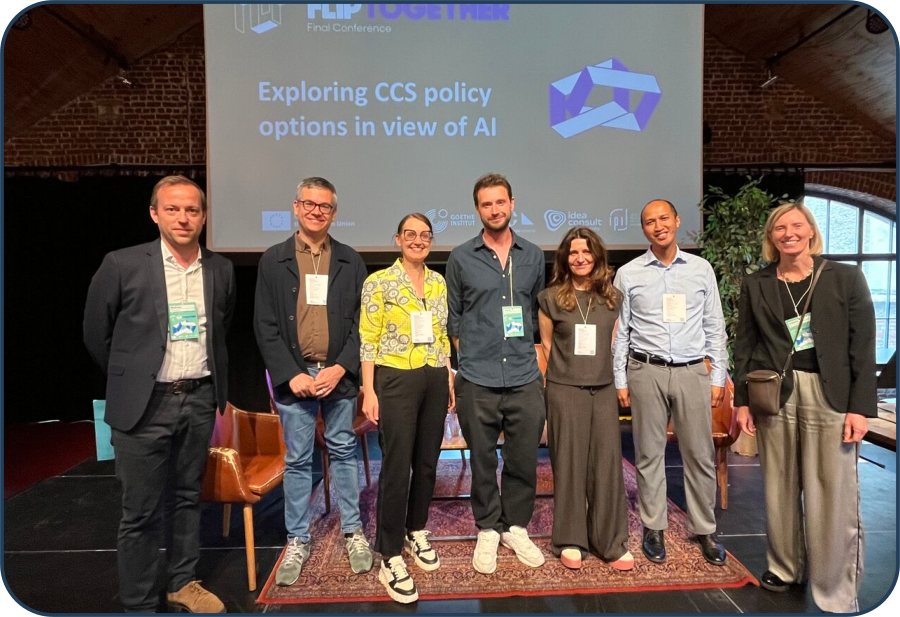
Special thanks to my co-panellists for the very lively
and constructive debate: Jordi Baltà Portolés,
UNESCO expert, María Iglesias, European
Commission, Mathieu Szeradzki, French Ministry of
Culture, Heritiana Ranaivoson, VUB, Steven MacKay,
Reset! Working Group on Digital Ethics, Isabelle De
Voldere, IDEA Consult


Mag.
Sylvia Amann
T
ailored Consulting Services
+43 7235 660
5411
office@infor
elais.org









Mag.
Sylvia Amann
Tailored Consulting Services
+43 7235 660
5411
office@infor
elais.org
+43 7235 660
5411 office@infor
elais.org
AI Culture
Policy Orientations: Equipping
Creators for the AI Era
The European AI debate is too much focused on
reactions – including in culture. It is time to bring
forward key actions for forward-looking policy
visions and plans, I argued at the final conference of
the strategic multiannual EU project Creative Flip.
The cultural and creative sectors have the potential
to be key players in such an approach.
As senior policy expert for Creative Flip, I also
designed and participated in a policy debate on AI
and the Cultural and Creative Sectors at the
project’s final conference.
Based on my research, I recommend to reorient
focus of policy action. While the prevention of
damage in the CCS is needed, and Europe has a first
relevant tool with the AI Act in place, not sufficient
attention of European policy makers is dedicated to
envision and designing wider perspectives in the
digital world.
Three main areas of action, from an expert point of
view seem to me, most promising:
1) Building own large-scale digital
platforms/services based on strategic autonomy as
comprehensive demonstrators how a human-
centred alternative of doing digital could bring
forward the well-being of large parts of populations
and creative sectors on the globe.
2) Investing further in global (beyond European)
digital humanism concepts and principles in order
to provide a strong conceptual base to global digital
transformation anchored in global cooperation as
an alternative choice to competitive and extractive
practices.
3) Making a fair exchange and co-development offer
to the Global South (the global majority) in which
the principles like autonomy, humanism, well-being
of populations are deeply embedded with the aim
to co-construct a cooperative digital model for the
21st century.
In addition, I share other key observations from our
debate:
•
AI provides an opportunity to re-anchor
broadly culture education in education policies (e.
g. critical thinking, artistic literacy);
•
Partner with initiatives addressing consumer
rights, active citizenship as well as with audiences
for transparency, trust-building and strengthening
democracy in the AI context
•
AI requires values-based change management
inside the cultural sector (organisations, companies)
as well as across sectors.
Special thanks to my co-panellists for the very lively
and constructive debate: Jordi Baltà Portolés,
UNESCO expert, María Iglesias, European
Commission, Mathieu Szeradzki, French Ministry of
Culture, Heritiana Ranaivoson, VUB, Steven MacKay,
Reset! Working Group on Digital Ethics, Isabelle De
Voldere, IDEA Consult
